
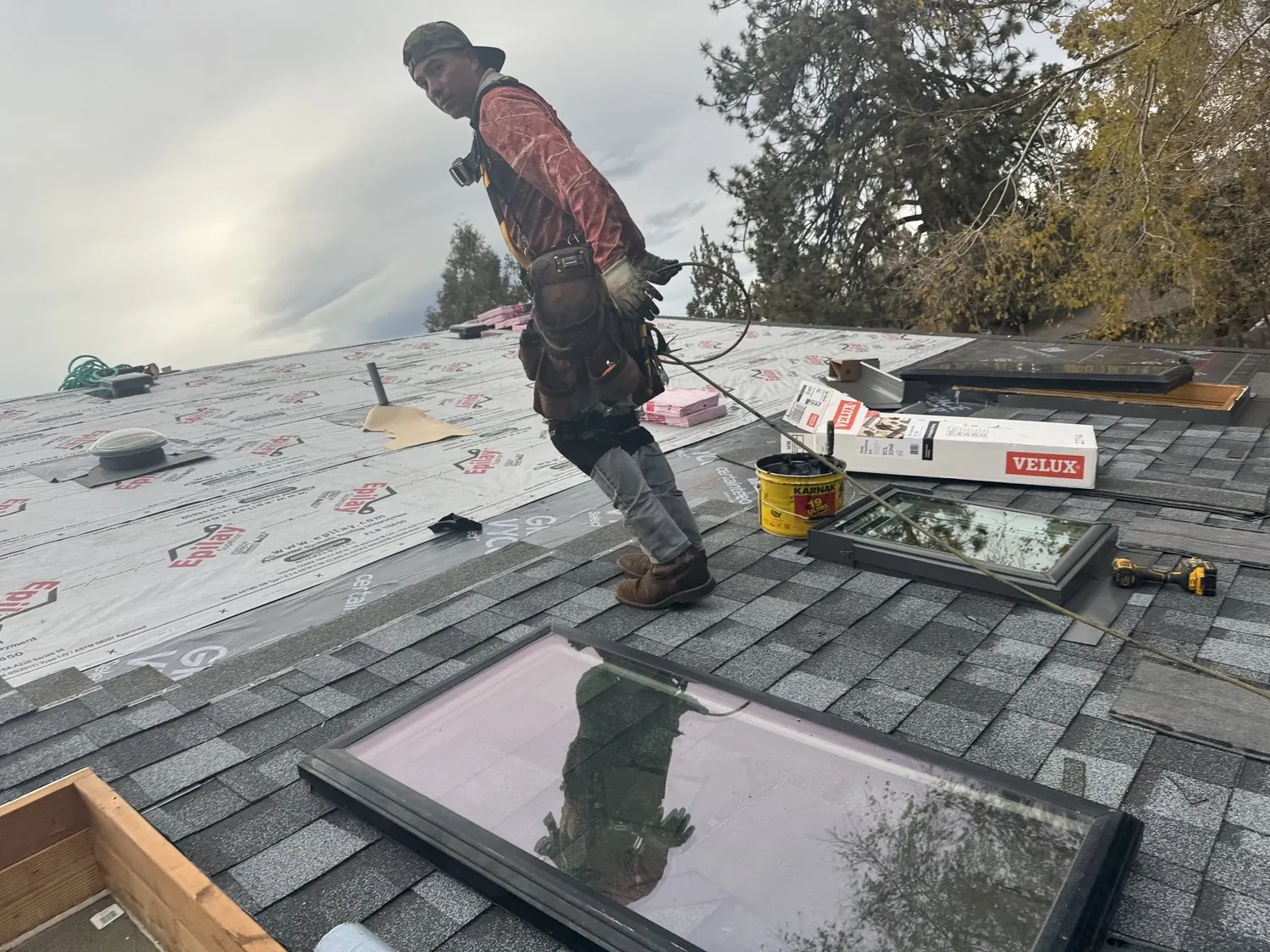
Roof Repair Services In Oregon, Utah & Idaho
A ceiling stain tells you water got in: not where. DryInside Roofing and Exteriors traces leaks and damage to the actual source, repairs it properly and tells you honestly whether the rest of the roof is still worth repairing.
Understanding Roof Repair
Roof repair restores a specific part of the roofing system that has failed, without replacing the whole roof. It makes sense when the surrounding materials still have useful life and the problem is contained to a specific area.
Water rarely drips straight down from where it enters. It gets under a shingle or flashing, runs along the underlayment or a rafter and shows up somewhere else, so a ceiling spot may sit four to eight feet downslope from a cracked vent boot or lifted step flashing. That's why patching directly above a stain so often fails.
When Roof Repair Is Needed
Most leaks come from a handful of predictable places, nearly all of them where the roof surface is interrupted.
- Flashing: step flashing at walls, chimney counterflashing and headwall flashing that has pulled away, rusted or was never sealed correctly
- Valleys: where two slopes meet and concentrate water
- Vents and pipe boots: rubber boots crack in UV and cold
- Penetrations: skylights, satellite mounts, solar brackets and exhaust fans
- Roof edges: missing drip edge, rotted fascia or ice backing up at the eaves
- Shingles: missing, cracked, creased or unsealed shingles that expose nail lines
- Wind and hail: lifted seal strips, creased shingles, bruising and dented metal; see wind damage and hail damage
Some leaks only appear in wind-driven rain, or during snowmelt when ice dams push water under shingles. Knowing when a leak shows up is one of the most useful clues you can give an inspector.
How DryInside Approaches Roof Repair
A lasting flashing repair usually means lifting shingles, replacing or re-seating metal and integrating it with the underlayment, not surface sealant that will crack in the next freeze-thaw cycle.
Pipe boots are straightforward to replace. Valleys and chimney flashing take more work but prevent the recurring leaks that do the most interior damage. Repair methods also differ by material: metal roofing (fasteners, washers, seams, trim), tile (the underlayment beneath is often the real problem), stone-coated steel and flat and low-slope membranes.
Built Above Minimum Code Requirements
Building code sets the minimum. On repairs, that means we don't stop at the visible patch: the failed component is tied back into the underlayment, flashing is replaced rather than caulked, and related details (boots, ventilation, eave protection) are checked so the repair holds up to local weather.
Repair, Replacement and Material Considerations
One leak on a sound roof is a repair. Repeat leaks across a worn roof usually mean the whole system is near the end of its useful life.
Missing asphalt shingles can often be replaced individually if the surrounding shingles are still flexible. On older roofs, shingles turn brittle and color matching gets harder, we explain both before starting. Learn more about asphalt shingles.
If repairs are becoming a yearly event, shingles are curling and losing granules across the roof, or the deck is soft, roof replacement may cost less over time than continued patching. Compare both in our repair vs. replacement guide.
Symptoms, Causes and Next Steps
Use this as a starting point, not a diagnosis; the same symptom can have very different causes.
| Symptom | Possible causes | What to do next |
|---|---|---|
| Ceiling stain | Flashing, pipe boot, valley, ice dam, condensation from poor ventilation | Note when it appears (rain, wind, snowmelt). Photograph it. Schedule an inspection. |
| Missing shingle | Wind, failed seal strip, improper nailing, aged shingles | Check for more on the ground. Get it covered before the next rain. |
| Dripping near a vent | Cracked pipe boot, loose vent flashing, condensation in the vent pipe | Place a bucket; check the attic if safe. |
| Water near chimney | Step or counter flashing separation, cracked crown, missing cricket | Don't caulk over it. Have flashing reset or replaced. |
| Water at the eaves in winter | Ice dam, missing ice and water membrane | Read about ice dams and ventilation. |
How a Roof Repair Works
Every repair follows the same sequence, so you know what was wrong and what was fixed.
- 01
Identify the Source
Trace water from the interior evidence back to the entry point, checking the attic where accessible.
- 02
Evaluate the Roof's Condition
Check flexibility, granule loss and sealing of the surrounding material, plus flashing, boots and drainage.
- 03
Determine the Right Repair
Recommend a focused repair: or explain why replacement may be the better investment.
- 04
Document What We Find
Photograph the damage and related components so you can see the problem yourself.
- 05
Review the Scope
You see photos of what we found and a clear scope and price before work begins.
- 06
Complete and Check the Work
The repair is integrated with the underlayment and reviewed, with the area cleaned up.
Roofing Standards and Technical Details
Repairs are measured against the roofing manufacturer's installation instructions and the building code adopted by the local jurisdiction; most adopt a version of the International Residential Code, sometimes with local amendments.
- Flashing and waterproofing: flashing is lapped into the underlayment so water sheds over, not behind, each layer
- Ventilation: attic intake and exhaust affect condensation and winter ice at the eaves; see roof ventilation
- Ice barrier: in cold climates, eave protection matters wherever ice dams are a risk
- Wind resistance: fastening and seal-strip condition determine how shingles hold in high wind
- Matching materials: repairs should use compatible products so manufacturer requirements are respected
What Property Owners Should Expect
If water is actively coming in, move belongings, catch the water and turn off power to affected light fixtures, then call the nearest office: Bend & Central Oregon (541) 241-6059, Utah & Idaho (801) 400-4719.
When conditions are safe, DryInside inspects, documents and explains the findings, then schedules the permanent repair. Please don't walk on a wet, icy or storm-damaged roof, smear roof cement over flashing, or chip ice dams off the shingles.
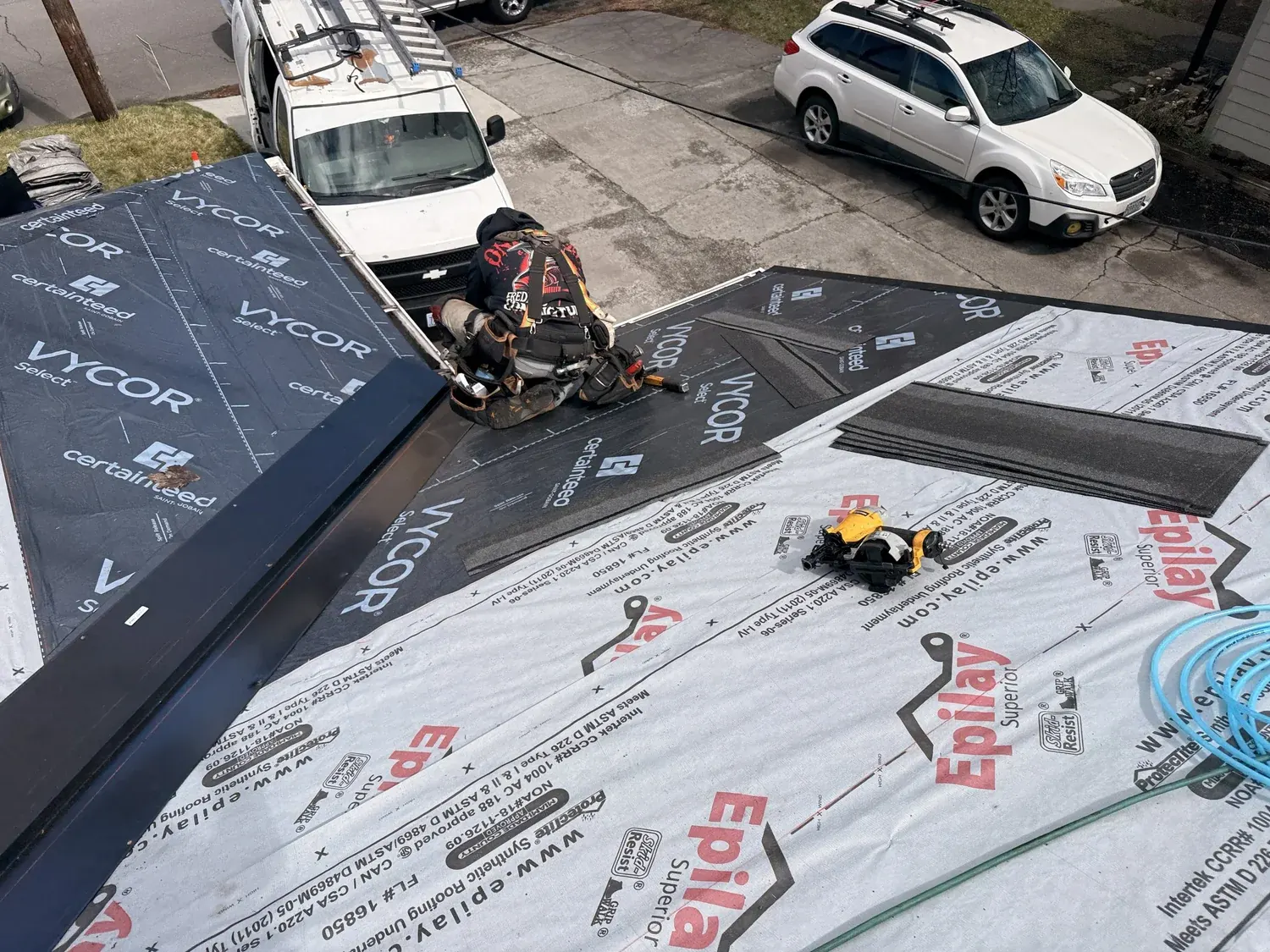
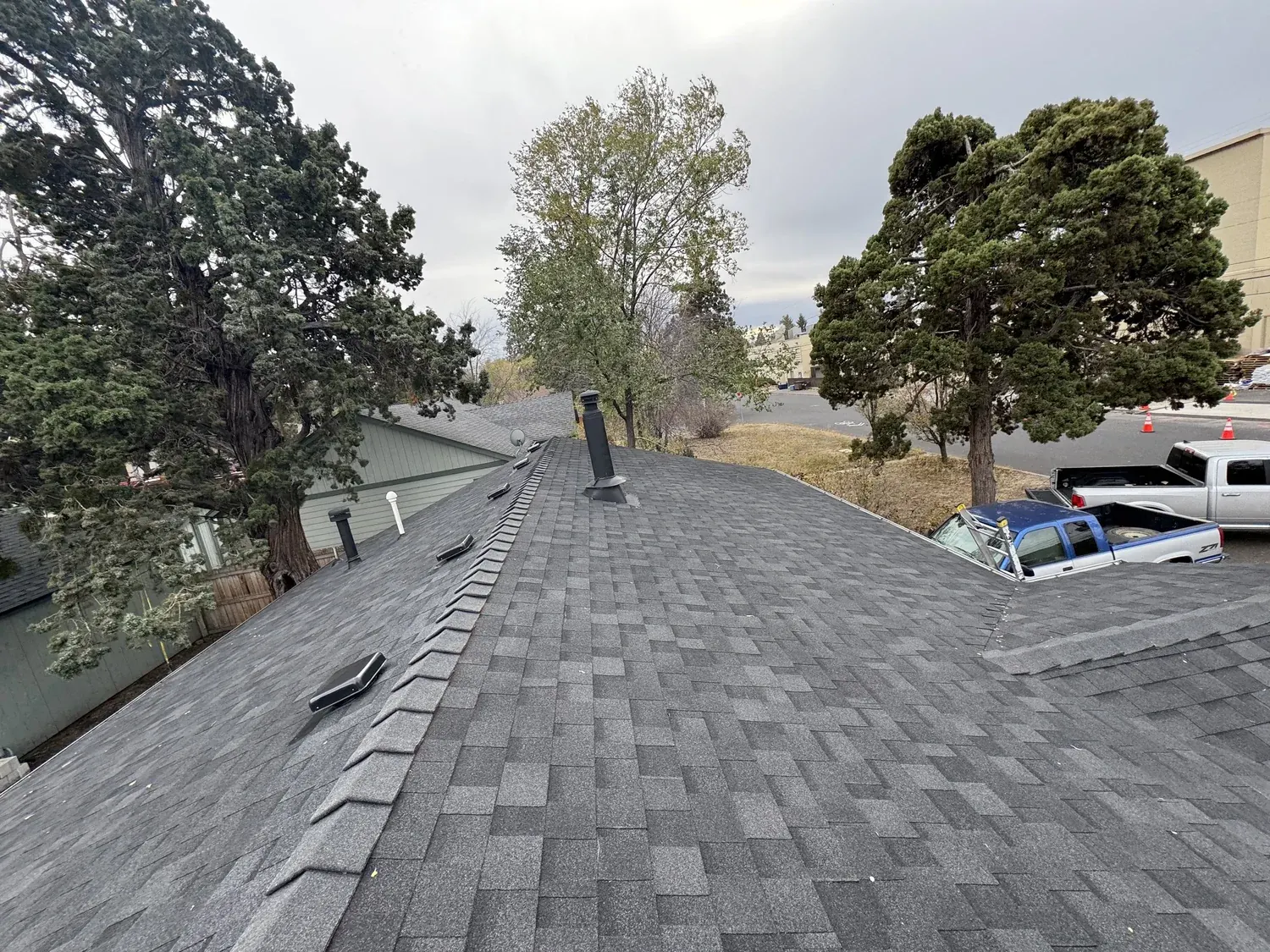
Recent Roofing Work by DryInside
View Gallery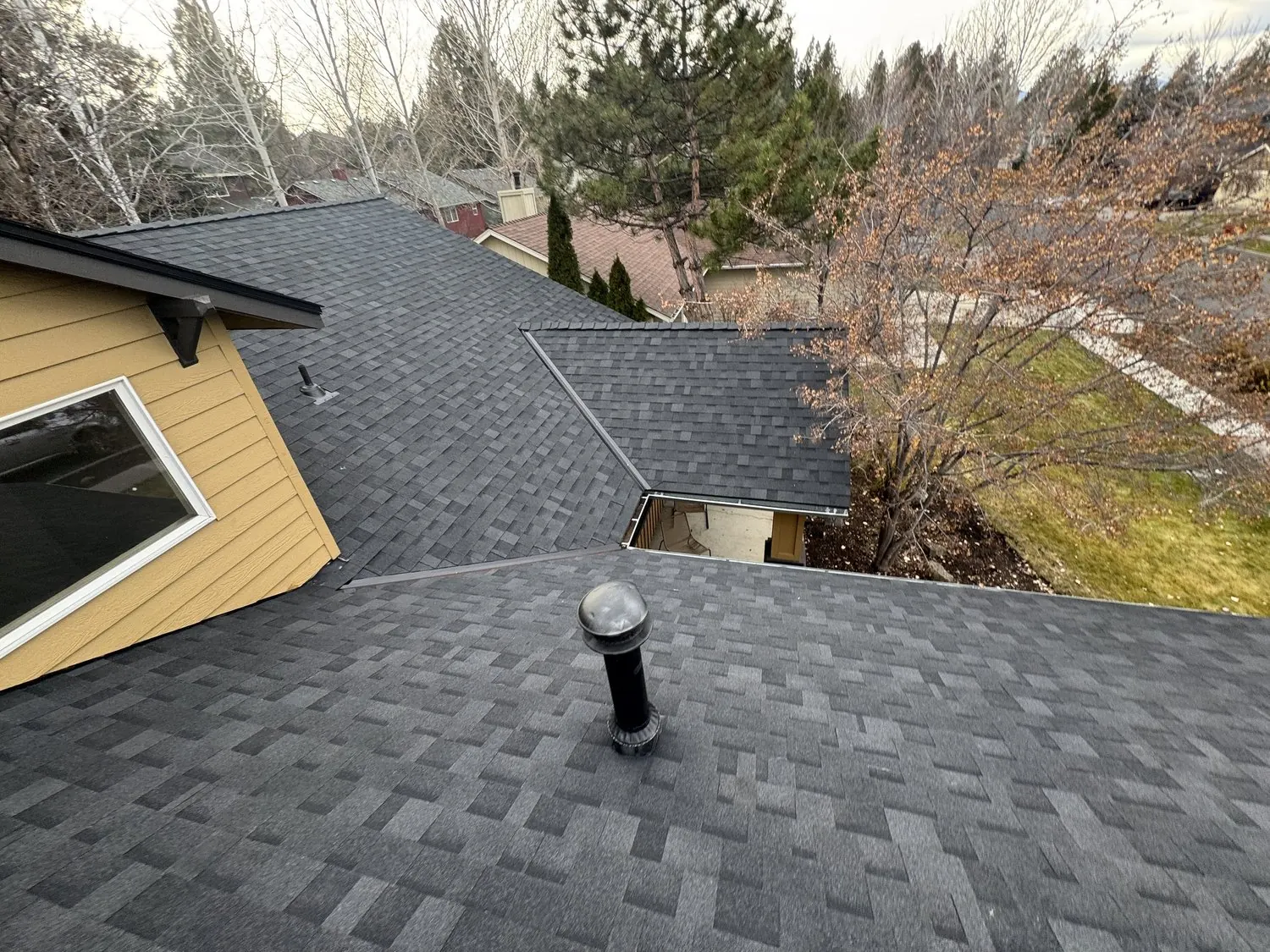
Other Roofing Services We Offer
Roof Replacement
Full replacement planned around decking, underlayment, flashing and ventilation.
Learn moreRoof Inspections
A clear look at visible conditions before a repair or replacement decision.
Learn moreStorm Damage Repair
Inspection and documentation after hail, wind and severe weather.
Learn moreCommercial Roofing
Leak troubleshooting for low-slope, metal and commercial roof systems.
Learn moreRoof Repair Service Areas
Offices in Bend, Oregon; Farmington, Utah; and Boise, Idaho. Other communities are service areas.
Roof Repair FAQs
How do you find where a roof leak is coming from?
By tracing water back from the interior evidence, checking the attic where accessible, and examining flashing, penetrations, valleys and shingles upslope from the stain. Knowing when the leak appears helps a lot.
How much does a roof repair cost?
It depends on the source, the material, roof pitch and access, and how much underlying damage there is. DryInside explains the scope and price after inspecting.
Do you offer free roof inspections?
Yes. Request one through the free roof inspection page or call the office nearest you.
Can you repair just a few missing shingles?
Usually, if the surrounding shingles are still flexible. On older roofs, brittle shingles and color differences can make spot repairs less practical. We'll tell you before starting.
When is replacement smarter than repair?
When damage or wear is widespread, leaks keep recurring in different places, or the deck is deteriorating. See roof replacement.
Why does my roof only leak in certain storms?
Wind-driven rain can push water past flashing that stays dry in straight rain. Winter-only leaks are often ice dams. Both point to specific components.
Is roof cement a good fix for a leak?
Only as a temporary measure. It cracks with UV and freeze-thaw and often hides the real problem. Lasting repairs replace or reset the failed component.
Do you repair metal roofs?
Yes: fasteners, seams, trim, flashing and damaged panels. See metal roofing.
Request Your Free Roof Inspection
Get a professional assessment of your roof and learn which repair or replacement options may be appropriate for your property.
DryInside Roofing and Exteriors is a family-owned residential & commercial roofing contractor licensed in Oregon, Utah and Idaho.