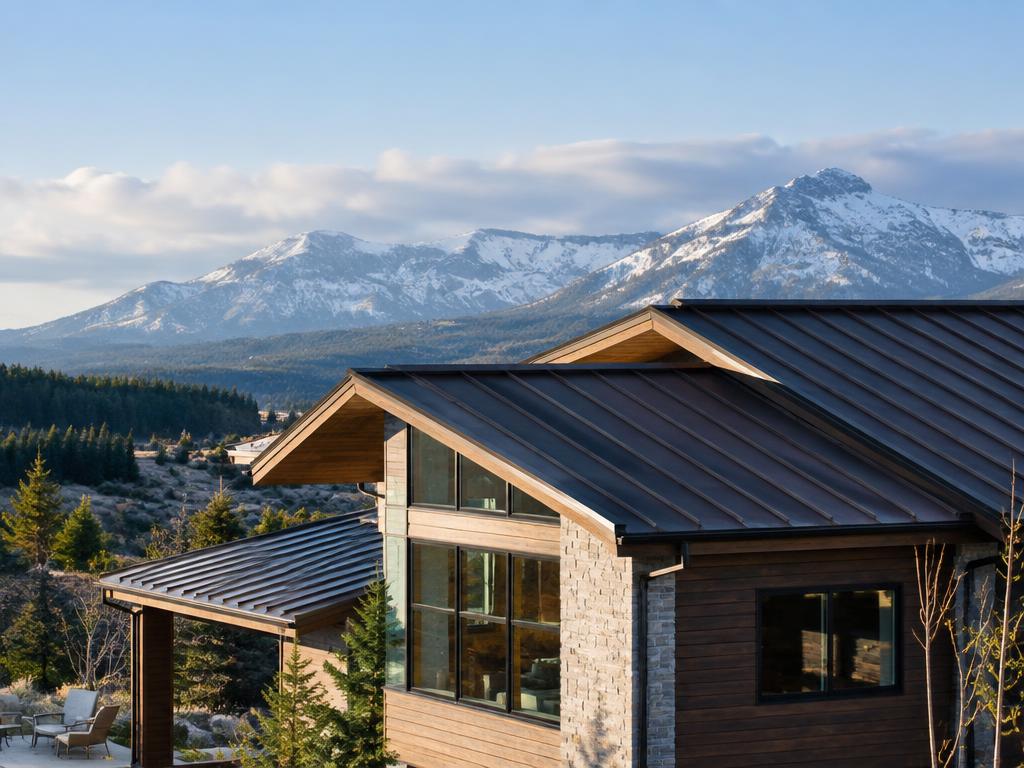
Metal Roofing Designed for the Property and Climate
Metal roofing can be an excellent fit for Central Oregon snow, Moab's high-desert sun and many Utah properties. Its performance comes from details: panel layout, seams, fasteners, flashing and planning for movement.
What Is a Metal Roof?
| System | How it attaches | Typical use | Key consideration |
|---|---|---|---|
| Standing seam | Concealed clips; raised seams lock panels together | Homes, modern architecture, snow country | Allows thermal movement; higher upfront cost |
| Exposed fastener | Screws through the panel face | Outbuildings, agricultural and some homes | Fasteners and washers need periodic attention |
| Metal shingles / stone-coated | Interlocking panels on battens or deck | Homes wanting a shake or tile look | See our stone-coated steel page |
Who It Works Well For
Metal suits owners who value durability and a clean architectural look and who plan to stay long enough to benefit from a premium system.
- Central Oregon homes with heavy snow exposure
- Moab and high-desert properties facing intense UV and heat
- Mountain-modern and farmhouse architecture
- Low-slope sections where appropriate profiles are used
- Commercial and agricultural buildings
Durability in Context
Metal resists many of the problems that age shingles, such as granule loss and UV brittleness. Durability still depends on gauge, coating, installation and how penetrations and transitions are detailed.
Snow Shedding: Plan It, Don't Ignore It
Metal sheds snow readily. That is useful for reducing load, but sliding snow can damage gutters, lower roofs, landscaping and vehicles or block entrances.
- Map where snow will land before installation
- Consider snow retention over entries, walkways and decks
- Protect lower roofs and gutters from slides
- Account for valleys and dormers that concentrate snow
Thermal Movement
Metal expands in heat and contracts in cold. In the high desert, a roof can see large temperature swings in a single day, so the system must allow panels to move without stressing fasteners or seams.
- Floating clips on standing seam systems
- Correct panel lengths and fastening patterns
- Slotted or flexible details at transitions
- Watching for oil-canning and loosened fasteners
Panels, Seams and Flashing
Most metal roof leaks start at details, not in the flat of the panel. Seams, ridge closures, valleys, chimneys, skylights and pipe penetrations need careful workmanship.
- Mechanically seamed vs snap-lock seams
- Closures at ridge and eave to block wind-driven snow
- Flashing sized for thermal movement
- Compatible metals to avoid corrosion
Coatings and Finish
The coating protects the metal and holds its color. Finish choice affects fade resistance, heat reflection and appearance. Scratches and coating damage should be evaluated so exposed metal can be addressed.
Hail: Cosmetic vs Functional Damage
Hail can dent a metal roof without letting water in. Cosmetic damage affects appearance. Functional damage affects performance, such as cracked coatings, compromised seams or damaged flashing.
| Condition | Often cosmetic | May be functional |
|---|---|---|
| Small dents in panel flats | Yes, if coating is intact | If coating is cracked or metal is exposed |
| Dented seams | Rarely | Can affect seam engagement and watertightness |
| Damaged flashing or trim | Sometimes | When it opens a water path |
| Coating fractures | No | Can lead to corrosion over time |
Design Considerations
Metal allows strong, clean lines. Panel width, seam height, color and trim profiles change the look considerably, so we review how the roof will read from the street and how it pairs with siding and windows.
Regional Relevance
In Central Oregon, snow shedding and freeze/thaw performance make metal attractive. In Moab and the high desert, UV resistance and heat are major factors. Along the Wasatch Front, metal works well on many homes, with hail exposure and HOA guidelines worth reviewing.
Repair and Replacement
Metal repairs usually focus on fasteners, sealants, flashing and damaged panels. Replacing a single panel can be difficult on some systems, so repair feasibility depends on the profile and availability.
Metal Roofing Brands and Profiles
Metal systems vary by profile, coating, fastening method and application. Depending on the property and project scope, we work with MCA and EDCO products, while DECRA serves projects that call for a stone-coated metal profile.
Metal Roof vs Shingles
Neither is automatically better. The right choice depends on budget, how long you plan to stay, snow exposure and architecture.
| Standing seam metal | Asphalt shingles | |
|---|---|---|
| Upfront cost | Higher | Lower |
| Snow | Sheds readily; plan snow retention | Holds snow longer |
| Hail | May dent; often cosmetic if coating intact | Can bruise or lose granules |
| Repairs | Detail-focused; panel swaps can be involved | Localized repairs usually simple |
| Look | Clean, modern lines | Traditional, broad color range |
Metal Roof Installation: What Matters
A metal roof is only as good as its layout and details. Installation quality shows up years later at seams, eaves and penetrations.
- Deck and underlayment suited to metal and temperature swings
- Panel layout that limits cuts and seams at valleys
- Clips and fasteners that allow thermal movement
- Pipe boots and flashing designed for metal
- Snow retention planned before panels go on
Metal Roof Repair
Most metal roof repairs involve failed sealant, backed-out or worn fasteners, damaged flashing or leaks at penetrations. Repair feasibility depends on the panel system and whether matching material is available.
Questions to Ask Before Choosing
Good decisions come from asking about the whole system, not just the surface material.
- Is standing seam the right fit, and which seam type?
- How will snow shedding be managed over entries and lower roofs?
- What gauge and coating are proposed?
- How are penetrations and skylights detailed?
- Which system types does DryInside install on this property?
In Salt Lake City & the Wasatch Front
Heat, snow and hail all affect metal roofs in Utah. See metal roofing in Salt Lake City.
In Bend & Central Oregon
Snow shedding, thermal swings and high-desert UV make metal a strong fit for many Bend homes.
DryInside Gallery
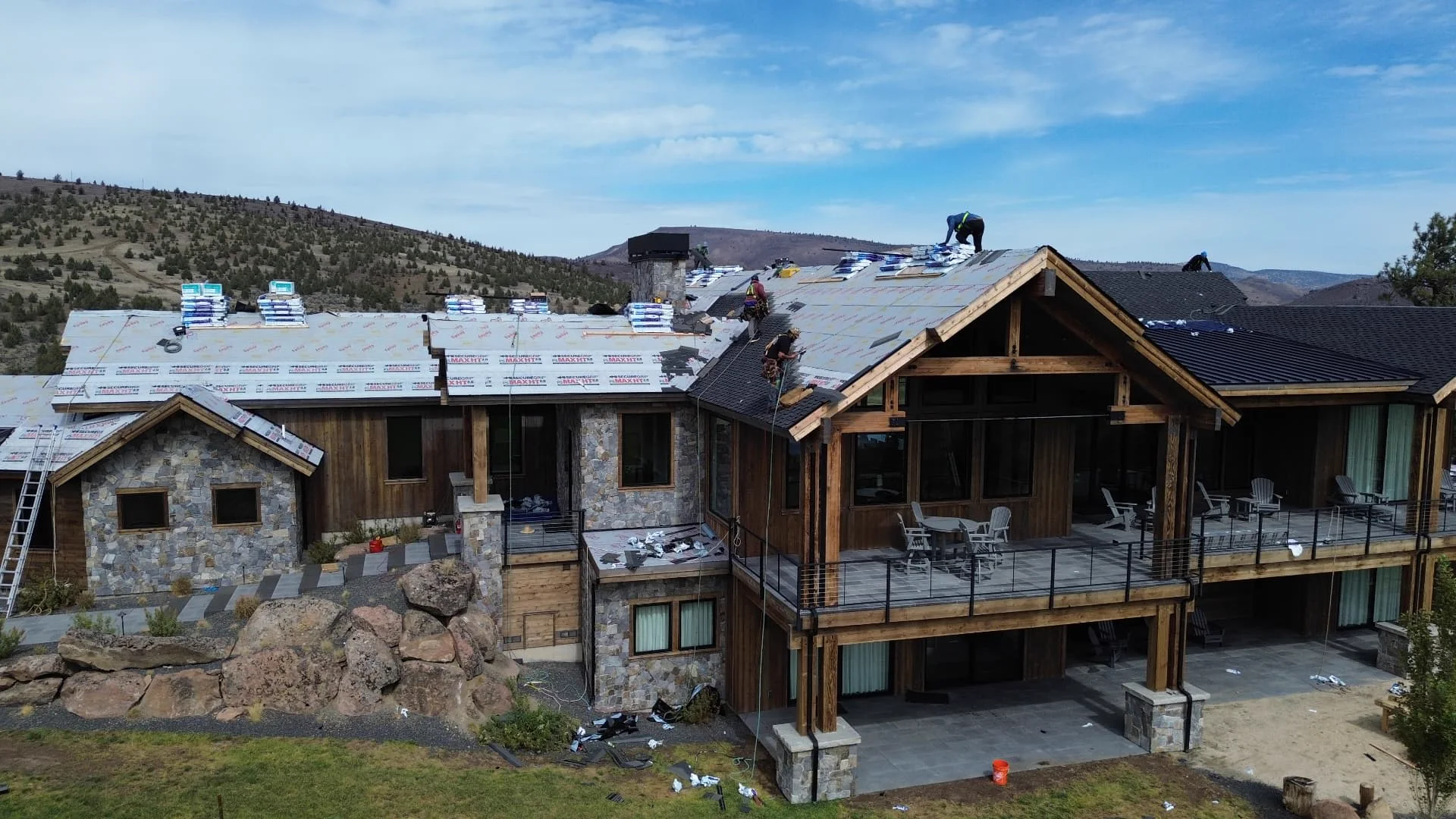
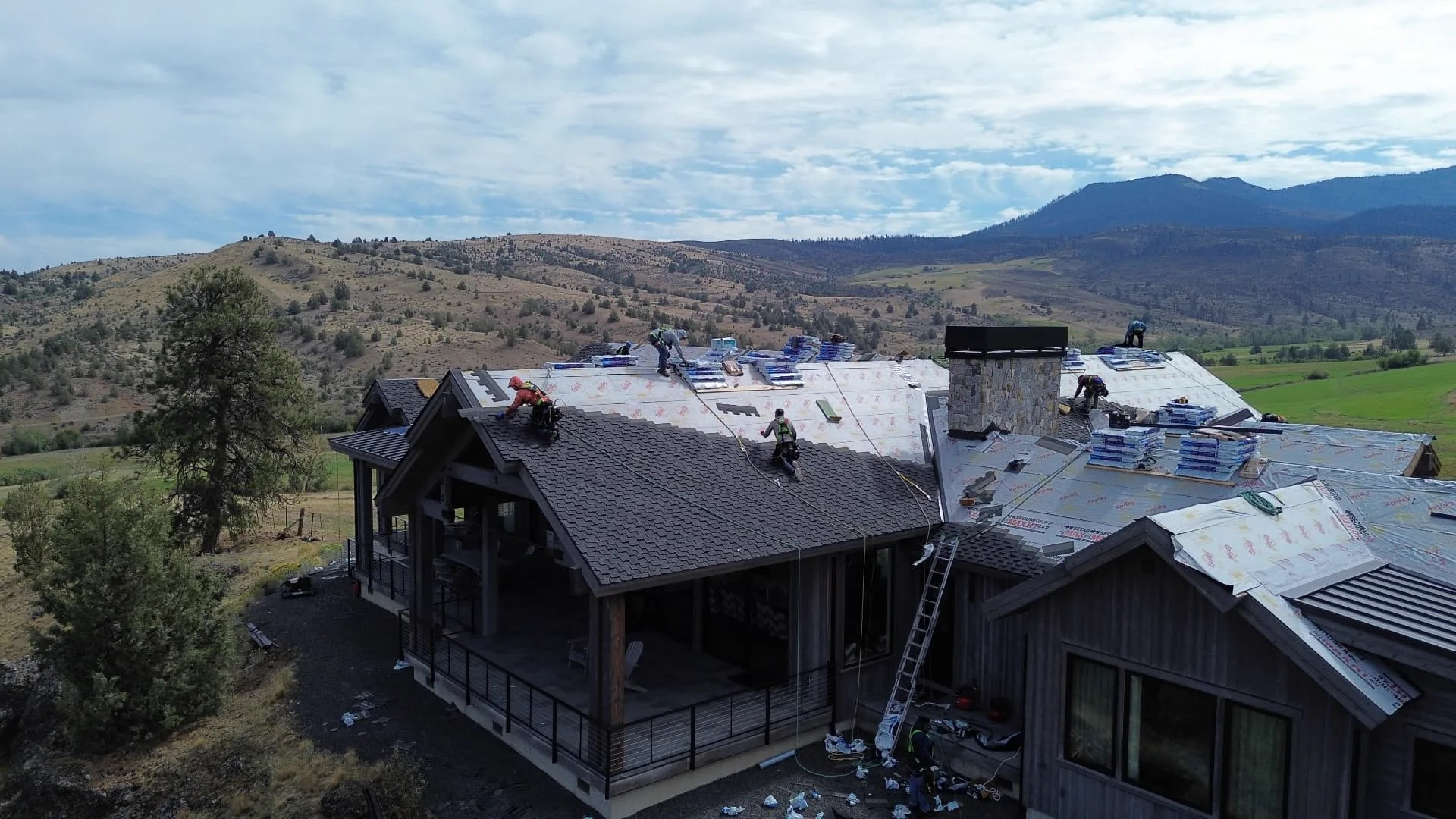
See real DryInside work, including finished roofs, installation details, tear-offs and active jobsites.
Recent DryInside Roofing Work
View Gallery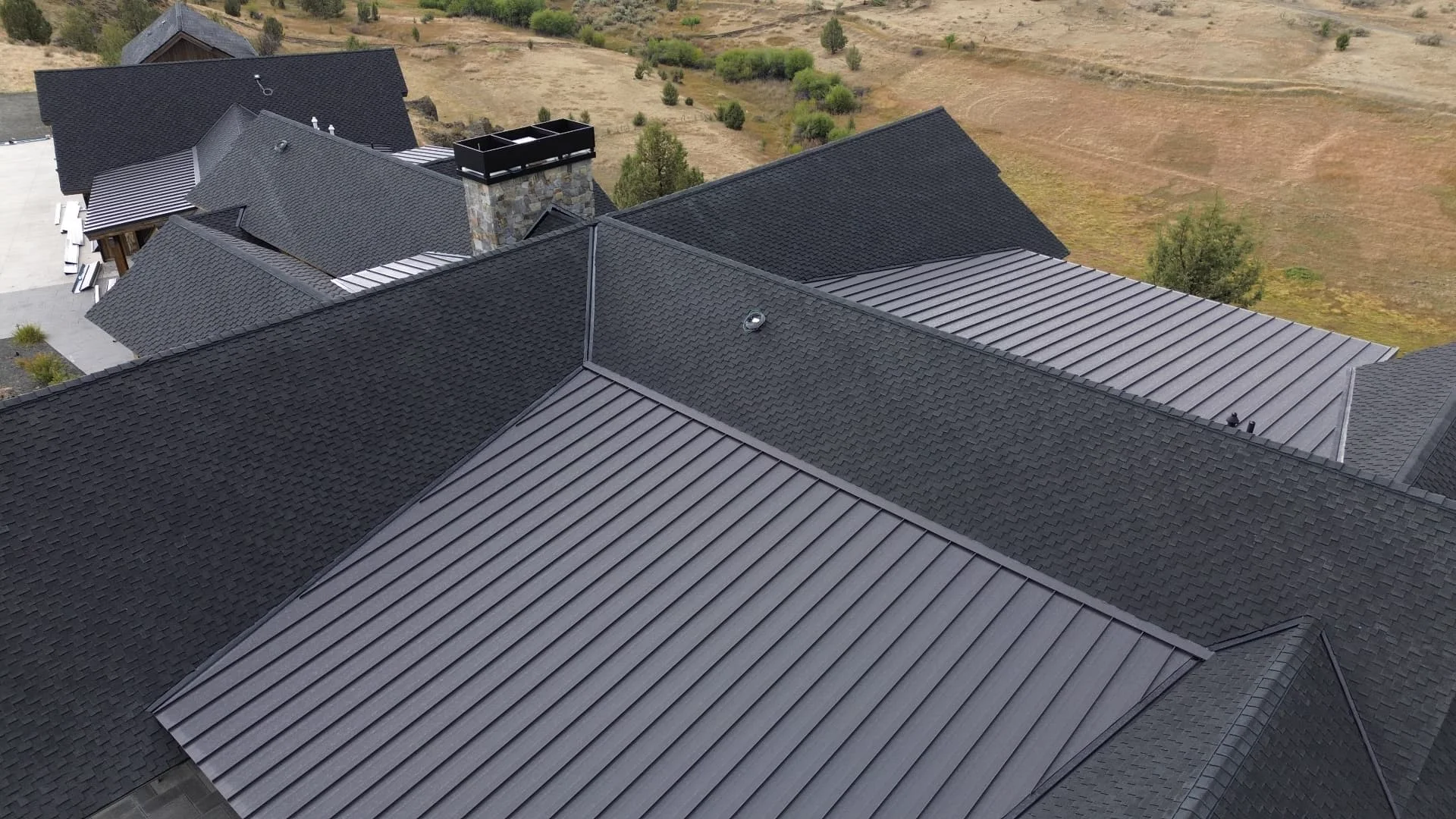
Frequently Asked Questions
Is metal roofing a good choice in Bend?
It often is. Metal handles snow and sun well. Snow retention, gutter protection and ventilation should be planned for the specific home.
Is metal roofing noisy?
Over a solid deck with underlayment, most homeowners find rain noise comparable to other roofs. Open-frame installations on outbuildings are louder.
Will hail ruin a metal roof?
Not necessarily. Many dents are cosmetic. An inspection helps separate cosmetic marks from damage that affects performance.
Can metal go over my existing roof?
Sometimes, depending on codes, deck condition and the system chosen. We generally prefer to evaluate the deck and underlayment before recommending an overlay.
Does metal work on low-slope roofs?
Some standing seam profiles are rated for lower slopes. Others are not. The profile must match the roof pitch.
Do you offer free roof inspections?
Yes. DryInside offers free roof inspections in Central Oregon, Utah and select Idaho communities.
Not Sure What Your Roof Needs?
Schedule a free roof inspection. We'll document what we find and explain your options clearly.
DryInside Roofing and Exteriors is a family-owned residential & commercial roofing contractor licensed in Oregon, Utah and Idaho.